
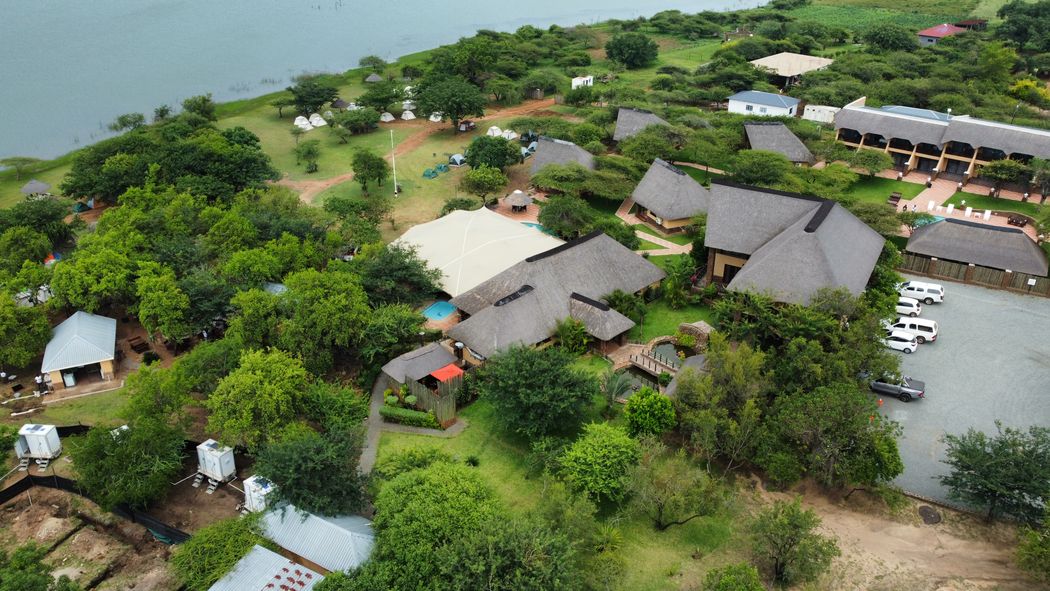
Tourism is one of Kenya's most consistently significant economic sectors, contributing close to a tenth of GDP in recent years and drawing well over a million international arrivals annually, alongside strong domestic travel demand. That scale creates real opportunity for land in the right location, scenic, accessible, or near an established travel corridor, but turning that potential into an operating hotel, lodge, or serviced property takes capital, licensing knowledge, and operational expertise that most landowners do not have on their own.
What a hospitality JV typically looks like
The landowner contributes a site, often one with a genuine locational advantage: proximity to a national park or conservancy, a coastal or lakeside position, or a growing urban business travel corridor. The investor or operator contributes construction capital, hospitality operating expertise, and frequently an established brand or booking relationships that a first-time hospitality developer would take years to build independently. This is close to what some hospitality-specific investment models describe as an invest-build-operate-exit structure: capital and expertise go in, the property is built and operated to a commercial standard, and the arrangement concludes on agreed terms once the investment has matured.
Where the sector is actually moving
Kenyan hospitality development has been shifting toward boutique and eco-lodge style accommodation rather than large-format resort hotels, reflecting both traveler preference and the lower capital intensity of smaller, design-led properties compared to full-scale resorts. This matters for a landowner evaluating whether their site suits hospitality development at all; a smaller, well-positioned plot can be a genuinely viable boutique lodge site even where it would never support a large resort.
What to check before committing to this sector specifically
- Licensing and classification. Hospitality developments carry sector-specific licensing requirements beyond standard construction and land-use approvals; confirm these are accounted for in the project plan and timeline, not treated as a formality to handle later.
- Seasonality of income. Tourism revenue is rarely flat across the year, and a profit-share structure needs to reflect realistic occupancy patterns rather than assume even, predictable returns.
- Operating expertise, not just construction capital. A partner who can fund construction but has no hospitality operating background is a materially different, and riskier, proposition than one who can also run the property once it opens.
Licensing and realistic timelines
Hospitality developments in Kenya are regulated through classification and licensing processes administered by the tourism authorities, on top of the standard county planning and building approvals every development needs. Confirming what classification the finished property is targeting, and what that requires, early in planning avoids a project that is structurally complete but not legally able to open on schedule. A boutique lodge or hotel development realistically runs from initial planning to opening over one to three years depending on scale, financing, and how quickly approvals move, a timeline landowners considering this sector should plan around rather than underestimate.
Financing patterns worth knowing
Hospitality projects are frequently financed through a mix of developer equity, project debt, and in some cases a phased approach where an initial smaller-scale property is built and proven before a larger expansion is financed off its operating track record. A landowner evaluating a proposed partner should ask which of these applies to the project on their land, since a phased plan changes both the construction timeline and when the landowner can expect meaningful income.
The general risks that apply to any joint venture, partner reliability, resource-imbalance in the profit split, and structural choices, apply here too; see the risks of a real estate joint venture in Kenya for the fuller picture before entering a hospitality-specific deal.
If you own land with hospitality or tourism potential, submit it for review. Investors can browse current hospitality and tourism joint venture opportunities already vetted and published.