
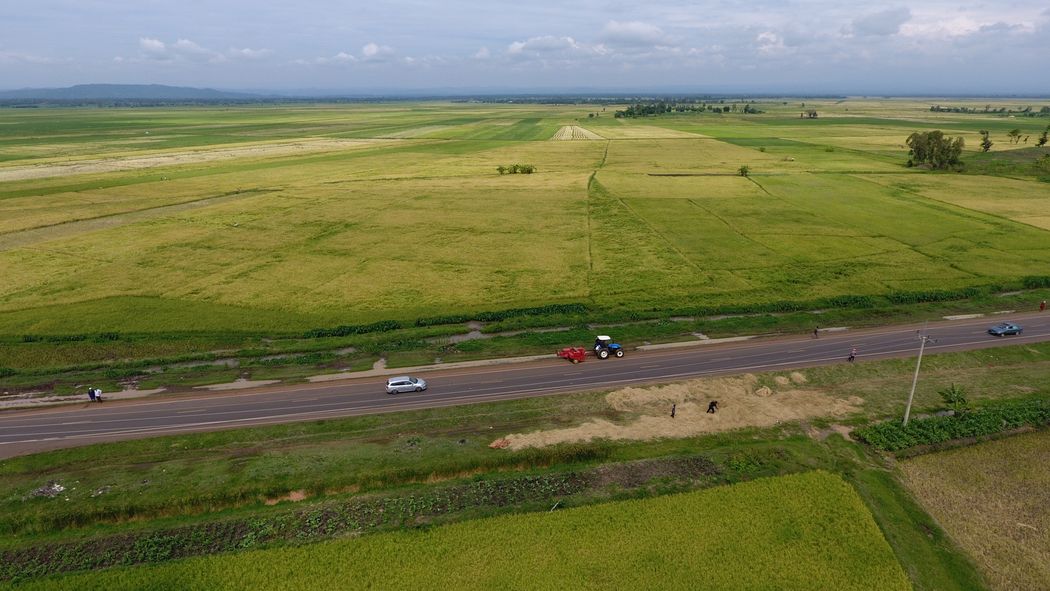
A large share of productive agricultural land in Kenya sits underused, not because it lacks potential but because the owner lacks the capital, equipment, or technical expertise to farm it at a commercial scale. A joint venture is the structure that connects that land to the capital and know-how it needs, and it looks different depending on which agricultural sub-sector it is applied to.
How an agricultural JV typically works
The landowner contributes the land, and in agriculture this contribution can take more than one form: an outright JV where land value is treated like any other capital contribution, or a leasing model where the landowner earns a share of output or a fixed lease payment without transferring long-term interest in the land itself. The investor or operator contributes working capital, equipment, technical management, and often market access, particularly for export-oriented crops where buyer relationships matter as much as growing capacity.
Where the real opportunity is by sub-sector
- Livestock, dairy, and poultry. These require ongoing operational management and working capital more than large upfront construction, making them well suited to a JV where the landowner benefits from steady output-linked income rather than a one-time development payout.
- Export horticulture. Kenya has an established export market for Hass avocado, French beans, snow peas, and cut flowers, all of which demand more technical growing expertise and buyer relationships than a typical landowner has alone, and reward the kind of capital and market-access partnership a JV provides.
- Land leasing as a distinct access model. Not every landowner wants to enter a full joint venture with shared governance and a multi-year commitment. A structured lease to an operator, with clear terms on land use and duration, is a legitimate lighter-weight alternative worth considering before committing to a full JV structure.
What makes agricultural JVs different from other sectors
Land use and consent requirements are more likely to apply. Agricultural land transactions and, in some cases, changes in how agricultural land is used commonly require Land Control Board consent, a step that does not typically arise for commercial or residential development on already-zoned urban land. Confirming this requirement early avoids a JV structure that stalls at the registration stage after both sides have already committed.
Seasonality and production risk also matter more here than in a typical construction-based JV. A profit-share model that assumes steady, predictable income can be a poor fit for a crop with a defined season and real weather or market-price exposure; the agreement should account for that variability rather than assume construction-style, phase-based payouts.
Off-take and market-access terms
For export-oriented crops especially, the value of the JV depends heavily on where the produce actually gets sold and at what price, not just how much is grown. A structured off-take agreement, where the operator or a linked buyer commits in advance to purchase the harvest at an agreed pricing formula, gives the landowner far more certainty than a JV that produces well but leaves marketing as an afterthought. Before agreeing to a profit split, a landowner should ask specifically how and to whom the produce will be sold, not just how much investment is going into growing it.
Getting the agreement right
The same fundamentals covered in what a joint venture agreement in Kenya should include apply here, with agriculture-specific additions: seasonal production cycles built into the profit-share timing, clarity on who bears crop-failure or livestock-loss risk, and explicit Land Control Board consent handling where relevant.
If you own agricultural land and want to explore a joint venture or lease arrangement, submit your property for review. Investors can browse current agricultural joint venture opportunities already vetted and published.